
The American Workforce in the Age of AI
Nine images, three styles, one argument: the trades and the tech industry are not two separate labor stories anymore. This is a Labor Day gallery for the fabrication shop and the server room, the gig driver and the machinist, built to sit next to each other instead of in separate categories.
Every Labor Day gallery defaults to the same handful of images — a wrench, a flag, a barbecue. Fine as far as it goes, but it skips the actual labor story of 2026: automation on the factory floor, AI in the server room, gig work replacing shift work, and a real question about what happens to craft knowledge when half of it is now typed instead of forged. This gallery sits in that gap on purpose.
These nine pieces were generated and directed using the same AI systems this site writes about daily — see Fire, the model-agnostic inference layer behind them. Three rendering styles, deliberately chosen per scene: Vivid Edge for the shop floor and the assembly line, Neon Noir for anything that happens after dark, and Heroic Oil for the two scenes here that are really about what gets handed down.
Vivid Edge
Crisp, high-contrast, comic-book-clean — a saturated red pushed against cool machine blues. The register for the shop floor: fabrication, assembly, robotics working alongside people, not instead of them.
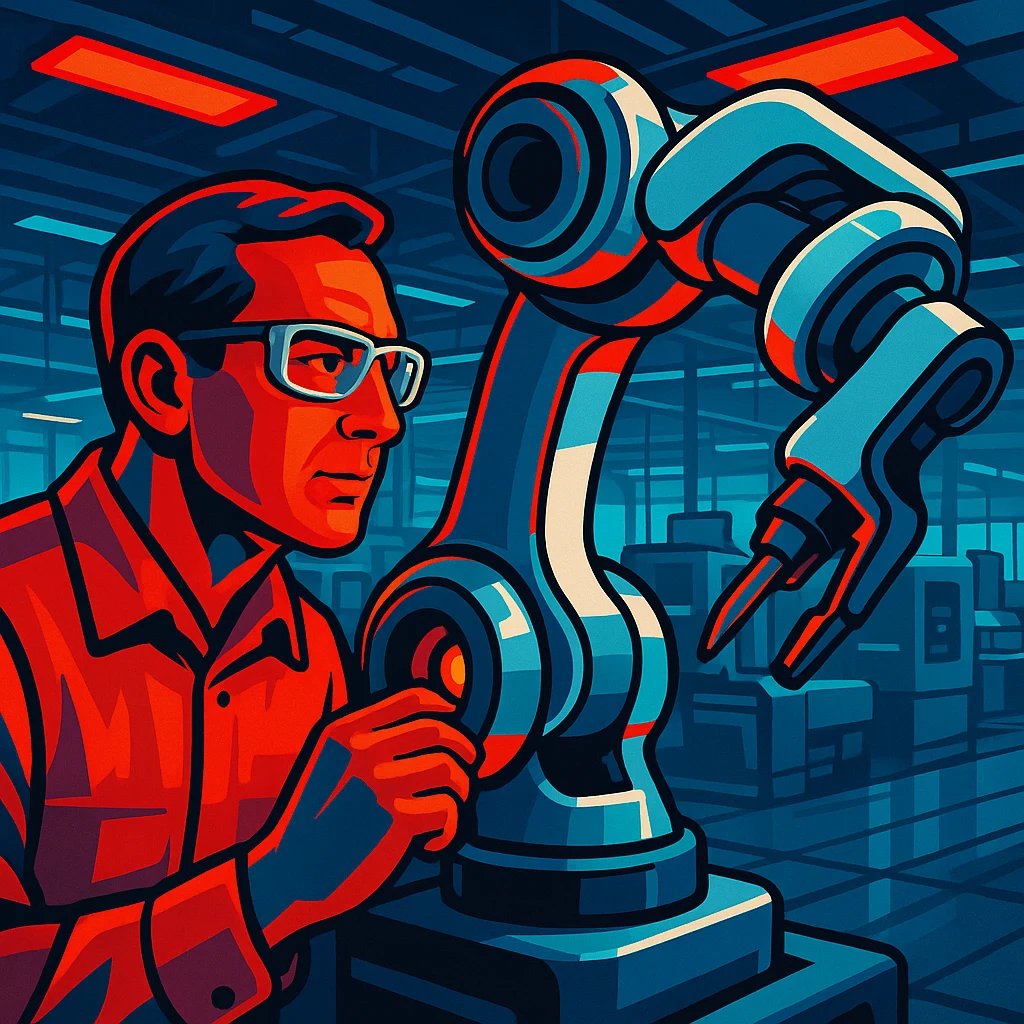
The Shop Floor, Now With Robots
Automation didn't empty the fabrication shop — it changed who's standing next to what. This is the Labor Day image for anyone whose job title didn't exist ten years ago: "robotics technician" is still a trade.

Digital-Age Labor
A hard hat sitting next to a keyboard is the whole thesis of this gallery in one frame. Writing software at 11pm to ship a deadline is labor — it just doesn't get a hard hat of its own.
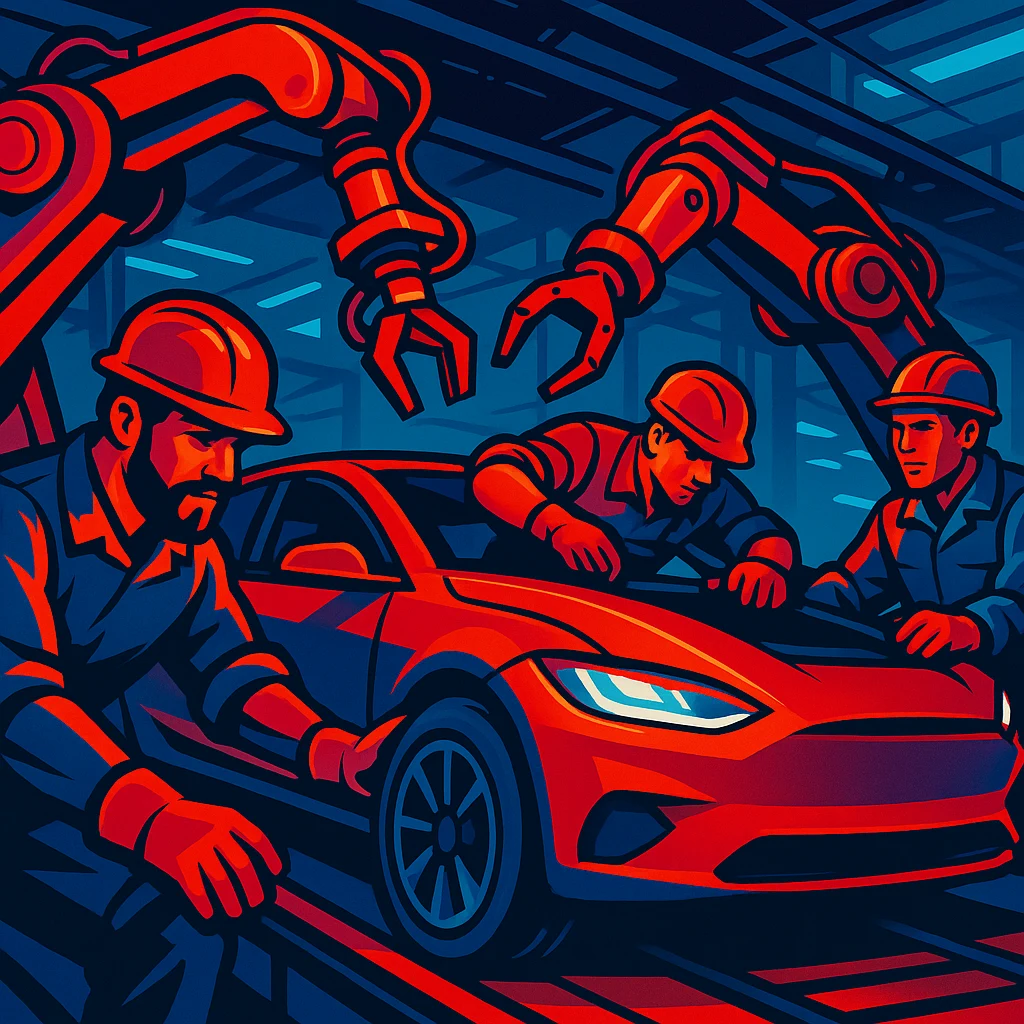
The Line, Human and Machine
Every debate about automation and jobs eventually comes down to this picture: people and robotic arms on the same line, doing different parts of the same job. Both are labor. Neither replaces the whole story.
Neon Noir
Deep blue-teal atmosphere, neon reflected in wet surfaces — the register for work that happens after the sun goes down: server rooms, gig deliveries, automated warehouses running unattended.

The Server Room at 3am
Somebody's on call so the AI models everyone talks about actually stay up. This is what "infrastructure labor" looks like in 2026 — anonymous, overnight, and completely load-bearing.
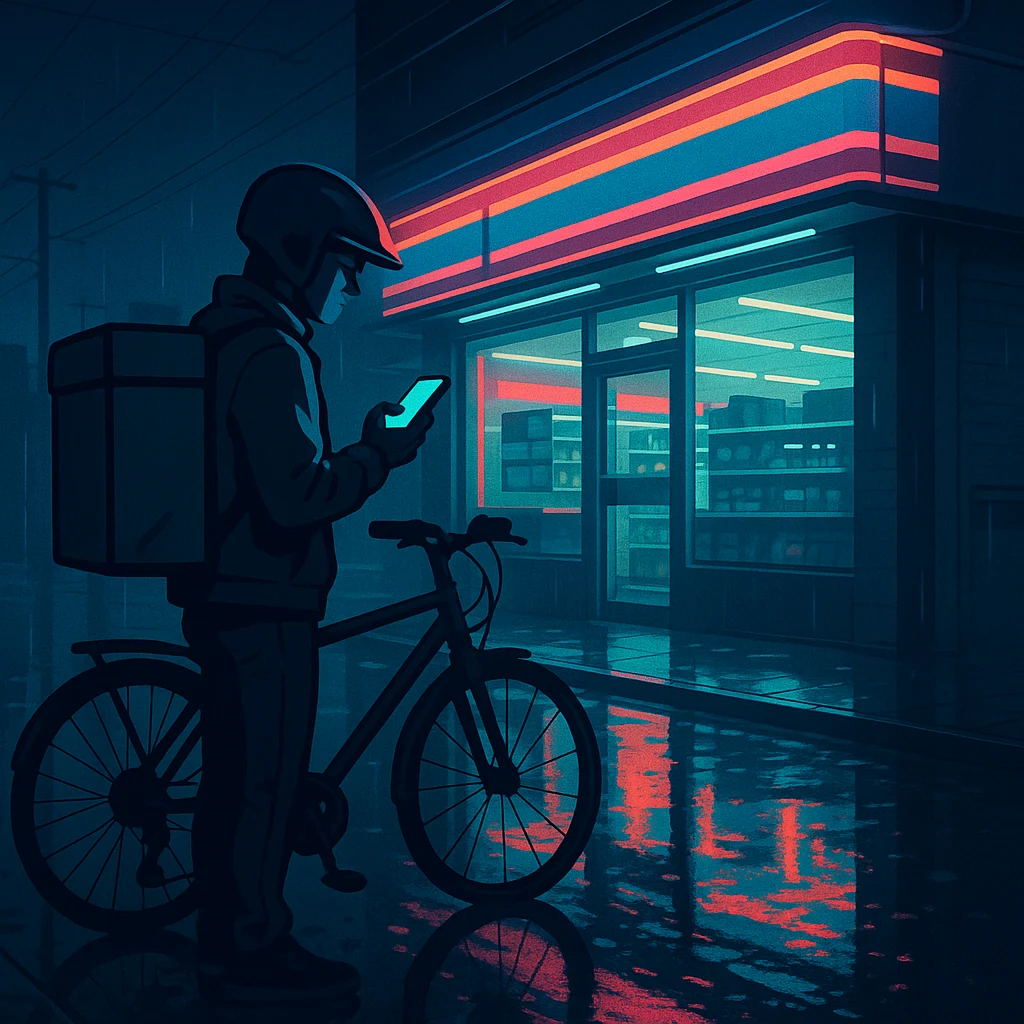
Gig Work, Under Neon
The gig economy is the least-unionized labor category that exists and one of the fastest-growing. Whatever Labor Day meant in 1894, it has to include the app-dispatched driver by now.
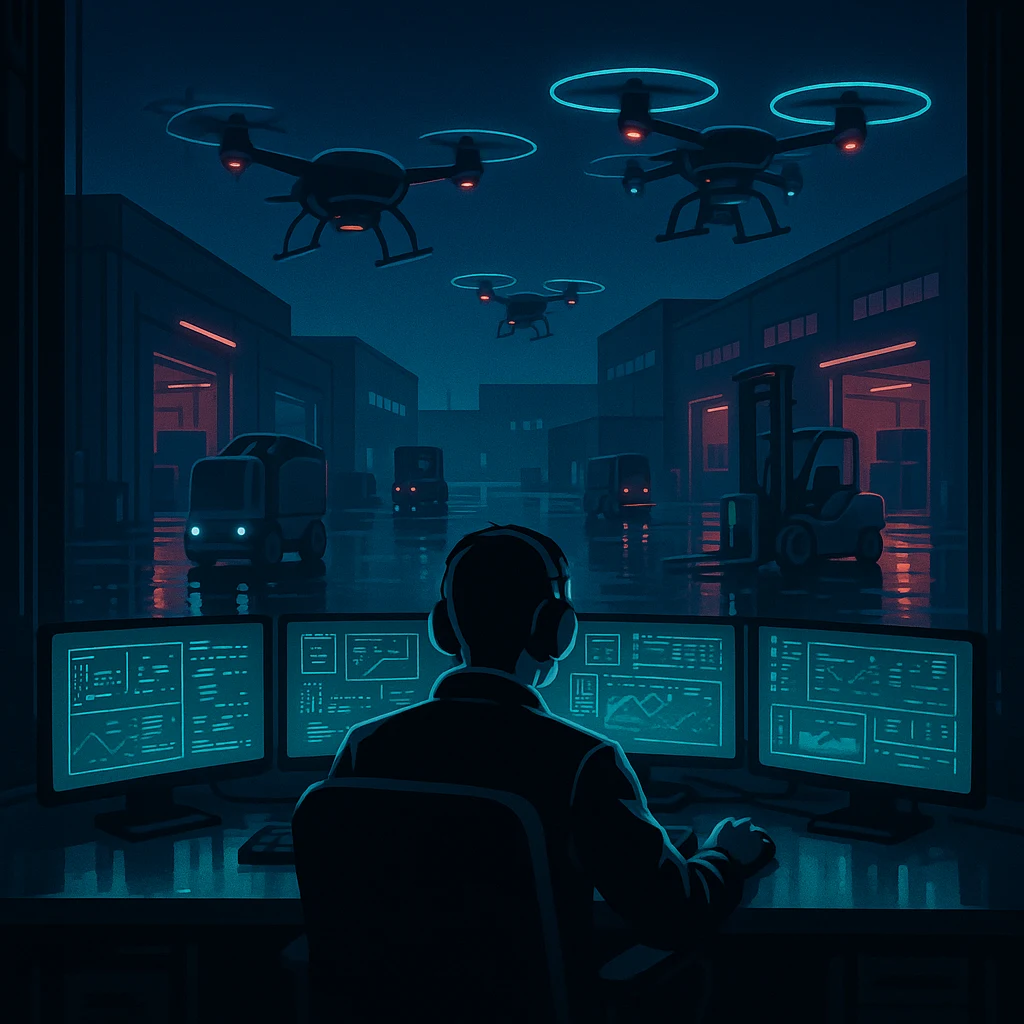
One Operator, a Fleet of Machines
This is the honest version of "AI is taking jobs" — it's not that nobody's there, it's that one person now supervises what used to take a shift of twenty. That's a different kind of Labor Day story.
Heroic Oil
Visible brushwork, single warm light source — used deliberately here, not as a default, for the two scenes that are actually about what gets passed down between generations.
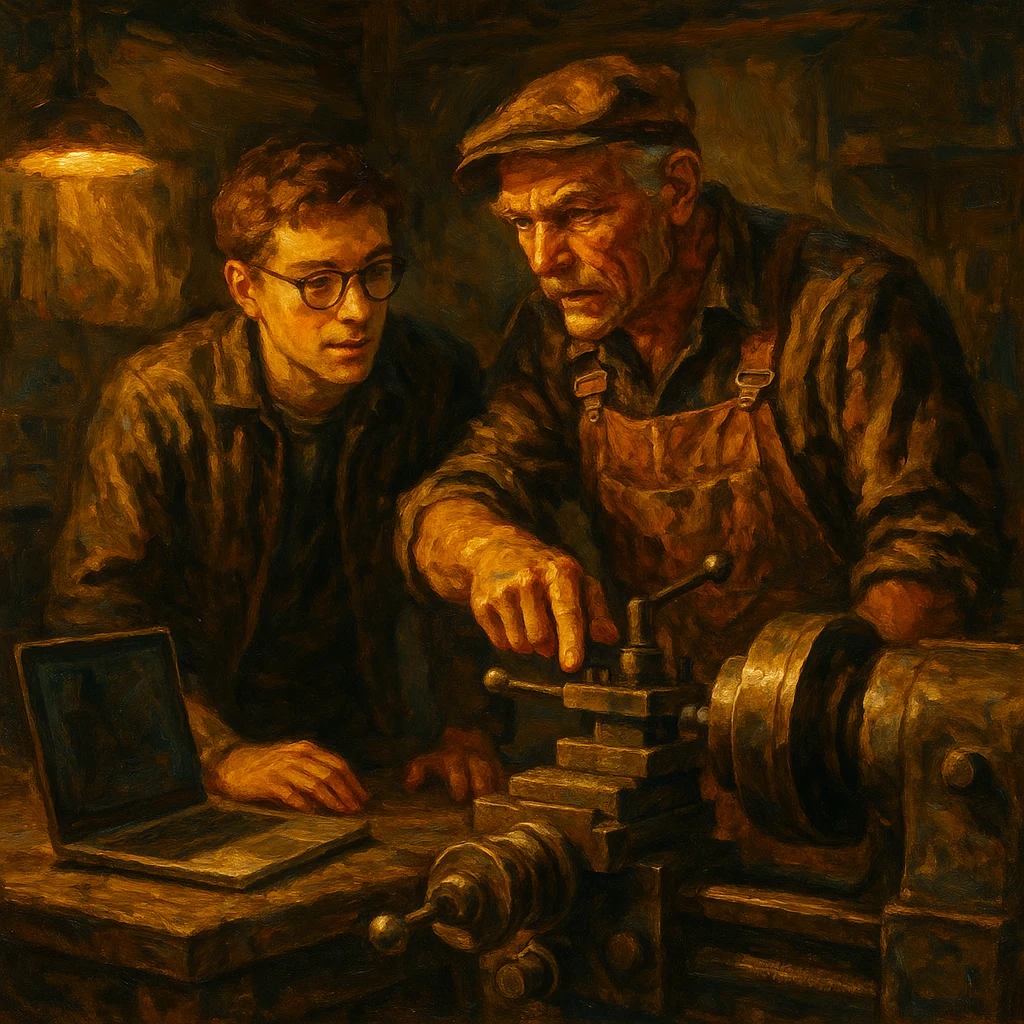
What the Old Guard Knows
A lathe and a laptop on the same workbench isn't a gimmick — it's the actual handoff happening right now between people who know how things are built and people who know how to automate the building of them.

Closing Up After the Sale
Small business ownership is labor too, even when nobody's clocking you out. The quiet end of a long Labor Day weekend, warm light and a locked door.

The Toolbox and the Flag
No machine, no monitor, no software — just the plainest version of the tribute this whole holiday is actually for.
If the automation-and-jobs framing above is one you want to keep reading about, that's most of what Fire Times covers day to day — AI systems, developer tools, and what they actually change about how work gets done.
— J.P. Howlett