

When I have an AI agent help me solve a problem, the more of my own thinking I give it, the better the solution. That's not a prompt trick. It's the whole mechanism.
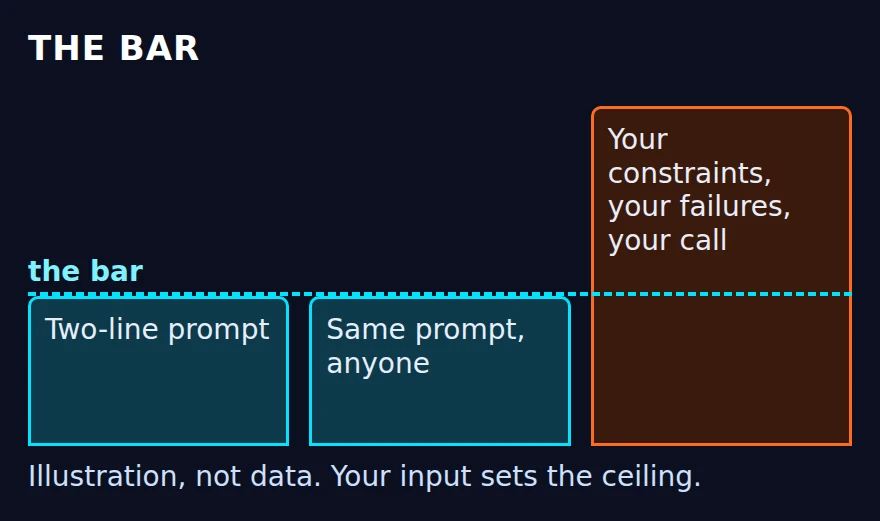
AI is an excellent way to get the bar: the consensus of current human knowledge, delivered fast. That's valuable. But the bar is not the goal. Successful humans raise the bar.
The Consensus Machine
A language model learns from an enormous body of what people have already written: documentation, forum answers, code, papers. Ask it to write code, design an architecture or draft an explanation and you get a compression of how people have solved this before. You get the bar.
That is why it feels so good. Getting to the standard answer used to take research; now it takes seconds. But speed to consensus is not the same as raising consensus. If your contribution is "I reached the standard answer faster," you haven't added anything the next person can't get with the same two lines.
You can see this in what ships. Code that works and has no opinion. API designs that follow every convention and solve no specific problem well. Documentation that sounds helpful and says nothing new.
The tool replaces the mechanical translation of a thought into an artifact. It doesn't replace the thought.
Your Input Sets the Ceiling
Bring a vague two-line prompt and you get a vague consensus solution. Bring specific constraints, what failed last time, and an opinion about which tradeoff matters most, and the solution changes. The AI didn't get smarter. You gave it something that isn't in the training data.
Here's the test. Could someone else get the same output with the same prompt? If yes, you're at the bar.
The people who ship differentiated work with AI load the context with their own thinking. They explain why the standard solution fails here. They name the constraint that isn't in the docs. They describe the user's mental model before it's consensus. Then they let the machine do what it's good at.
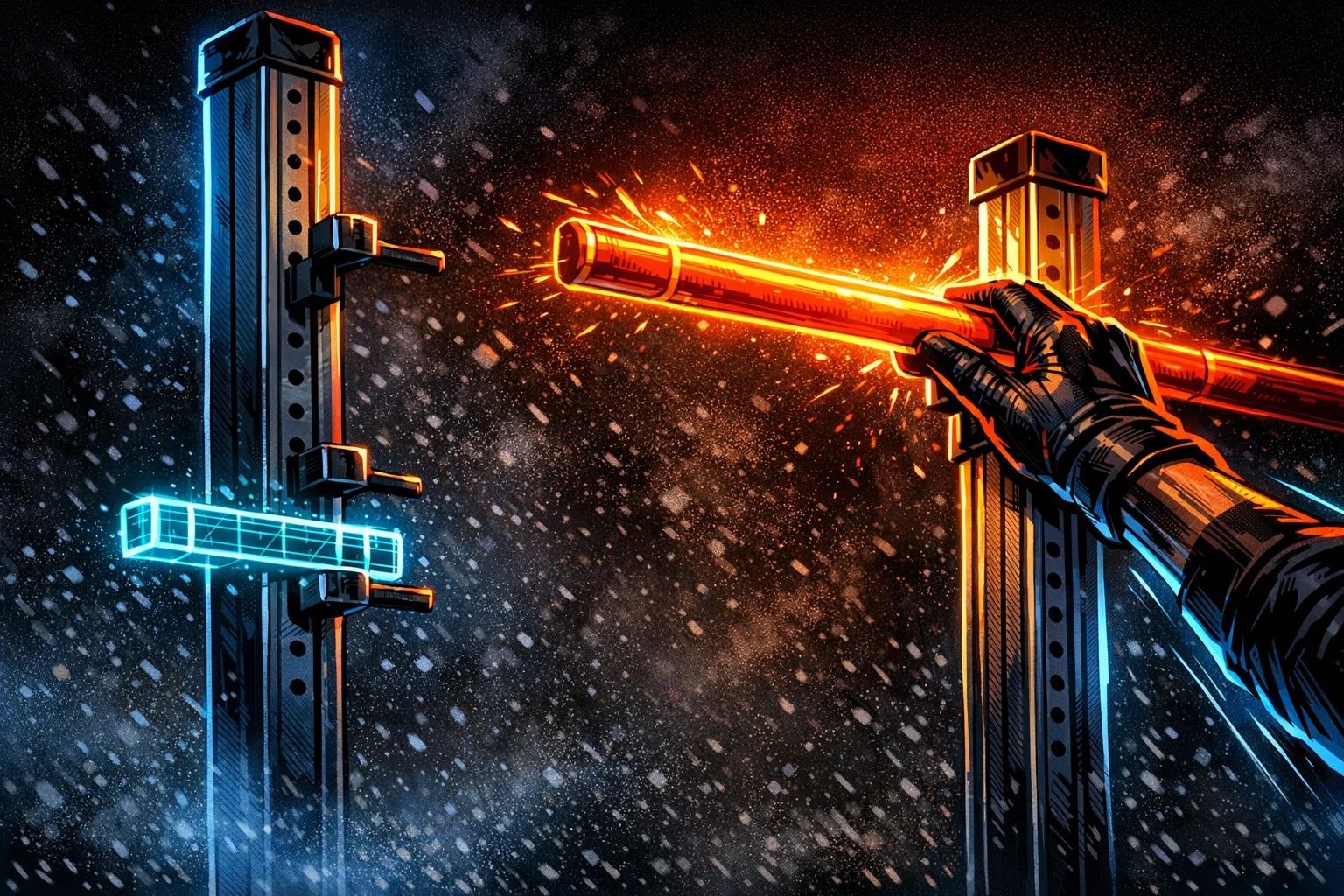
AI makes good thinking easier to implement. It does not replace human thought.
Why Fire Times Requires a Personal Angle
This is why nothing gets published here without a personal angle. It's a quality filter, not a style preference. Without one, a piece is a remix of the bar: consensus resurfaced, plausible, and empty. You can generate that in half a minute, and so can everyone else.
A personal angle means you have a stake. You tried something. You noticed a pattern. You disagree with the standard take for a specific reason. The AI can help you say it faster, tighten the structure and catch the gaps. It can't generate the angle. That part is yours.
What This Means for Builders
Your competitors have the same models and access to the same consensus. Reaching the bar faster is table stakes now. Everyone does it, and it's priced in. The margin is in raising it.
So don't treat AI as a black box that works better with less input. Bring more thought, more context, a more specific understanding of the problem, and let the machine turn that into something shipped at a speed that wasn't possible before.
Related reading on this site: The AI Cone on why most people just get faster at the job they already had, and Knowledge Distribution on why giving knowledge away multiplies it.
— J.P. Howlett
Sources
- Brown et al., "Language Models are Few-Shot Learners" (how large language models are trained on large bodies of existing text)
- J.P. Howlett, comments on a Quora thread about AIs programming themselves, 3 November 2026 (the original source of this piece)